
Keeping a home or commercial building in good shape usually comes down to balancing ongoing chores with smart, long-term upgrades. A common and tedious exterior home maintenance task: clearing out clogged roof gutters.
When leaves, twigs, and organic matter collect in your gutters, water doesn’t have anywhere to go. It backs up, overflows, and can cause serious damage to your roofline, siding, and foundation. This leaves property owners wondering: do you really need gutter guards, or are you better off just paying for routine gutter cleaning?
We’ll get into how gutter protection works, how the initial cost stacks up against ongoing maintenance, and whether guards make sense for your home or property.
Q: What Exactly Are Gutter Guards, and How Do They Work?
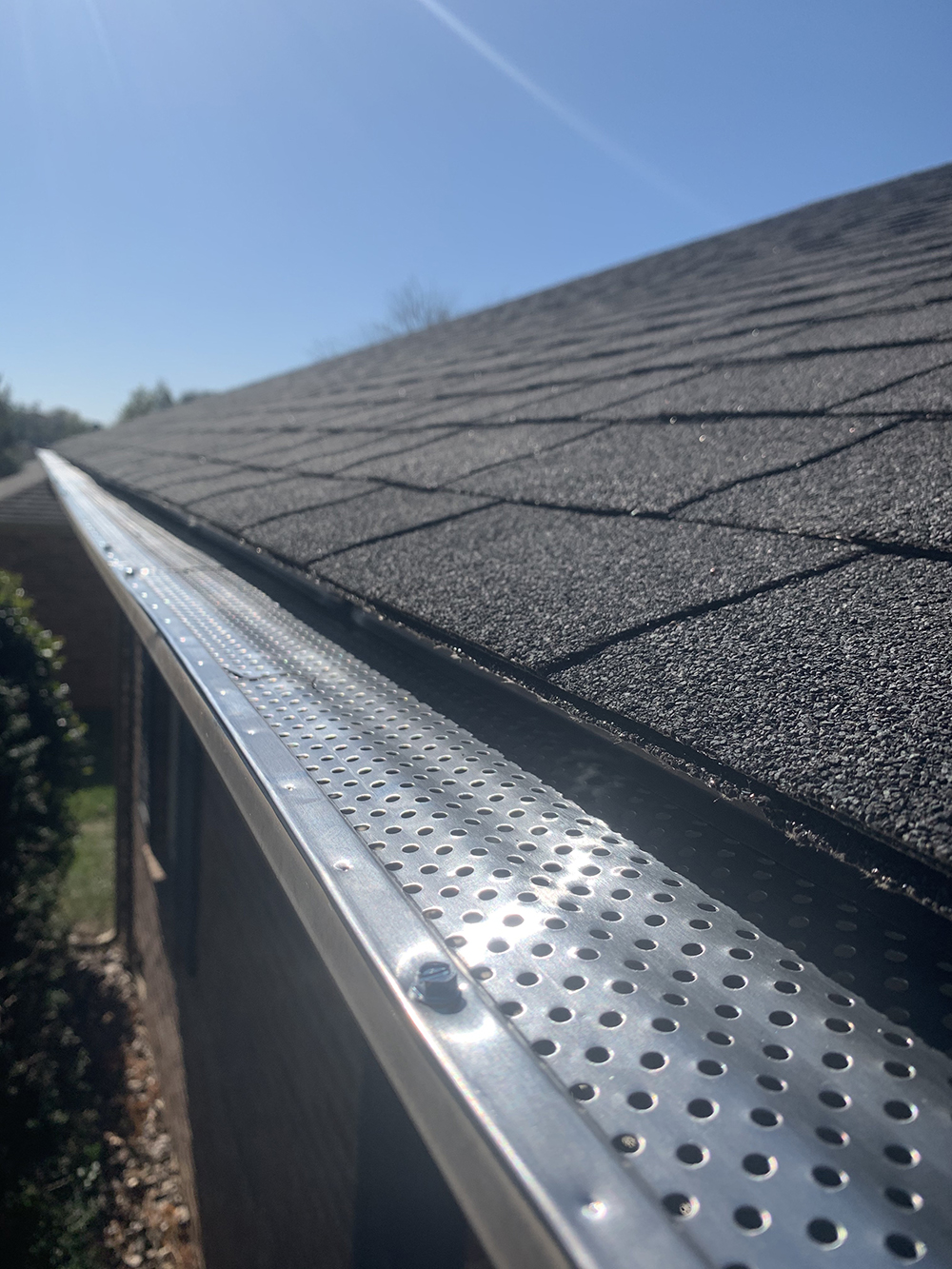
A: Gutter guards, sometimes called leaf covers, screens, or filters, are protective tops that fit over open gutter channels.
Think of them kind of like a strainer in your kitchen sink. When it rains, water flows off of your roof, passes through the guard’s small openings, and drains down the gutter trough where it belongs. At the same time, leaves, twigs, seed pods, and pine needles sit on top of the guard instead of falling inside. Once those leaves dry out, the wind simply blows them off of your roof.
By keeping bigger debris out of the trough, guards keep water flowing freely through your downspouts and safely away from your building without letting thick clogs form.
Q: How Does the Upfront Cost Compare to Regular Maintenance Expenses?
A: Deciding whether to install guards comes down to weighing a one-time upgrade cost against continuous, out-of-pocket expenses.
Without guards, open gutters generally need a deep cleaning two to four times a year. Especially during fall leaf drops and heavy spring rainstorms. Searching for gutter cleaning near me every few months turns into a recurring bill. It could even be a safety risk if you try climbing a tall ladder to clear out the buildup yourself.
Installing quality gutter guards requires an initial investment upfront. But because they prevent debris from building up in the trough, they eliminate the need for constant seasonal cleanouts. Over just a few years, what you save on skipped cleaning services (and avoided paying on water damage repair bills) can easily pay back the original cost of the installation.
Q: Do Gutter Guards Mean You’ll Never Have to Touch Your Gutters Again?
A: Gutter guards get rid of the dangerous, messy job of scooping rotten leaves, mud, and standing water out of your gutters. You won’t have to schedule seasonal cleanouts just to unblock jammed downspouts.
That said, no exterior home system is 100% maintenance-free forever. Very fine debris, like tiny bits of pine dust or heavy tree pollen, can occasionally sit on top of the guard cover. Most of the time, rain and wind wash this surface dust off naturally. Every now and then, a quick visual check from the ground, or a light brush off after a major storm, is all it takes to keep everything working smoothly.
It also makes sense to have someone check out your gutters every so often just to make sure everything is working the way it should. Keeping an eye on things is a fantastic way to avoid future repair bills from water damage.
Q: What Are the Most Common Types of Gutter Guards?
A: Different types of guards work best for different kinds of trees and weather conditions.
Micro-mesh guards are made with a fine stainless-steel screen, and block even tiny pine needles and roof shingle grit while pulling heavy rain down into the gutter.
Screen guards use durable wire or plastic grids that do an excellent job stopping larger items like oak leaves, twigs, and seed pods.
Reverse-curve (surface tension) guards are solid metal covers curved at the edge. Gravity forces rainwater to curve around into a narrow slot while leaves slide off the side.
Perforated aluminum covers are metal panels punched with small drainage holes. They handle huge volumes of water and hold up well under heavy snow or ice.
Q: How Do Gutter Guards Protect Your Home’s Structure?
A: When open gutters get packed with wet leaves, the heavy weight can pull the gutters away from your house. Over time, that overflowing water causes some big problems.
Water soaking into wood trim behind your gutters rots out the supports holding up your roofline. Rain spilling over the side pools right around your foundation can crack concrete walls, flood basements, and wash away topsoil. Plus, wet, clogged gutters are prime real estate for mosquitoes, birds, wasps, and rodents.
Gutter guards make sure rainwater goes where it’s supposed to go, which protects your wood trim, saves your paint, and carries heavy rainfall safely through your downspouts.
Q: Should You Invest in Gutter Guards for Your Property?
A: if your property has trees nearby, or if you want to avoid having to search for “gutter cleaning near me” several times a year, gutter guards are a smart and practical investment.
Instead of spending time and money managing clogs after every storm, a custom-fitted guard system keeps drainage running clear automatically. Protecting your property saves a lot of money, time, and stress in the long run! Contact us for a free estimate; we’d be happy to answer any further questions you might have for us.